

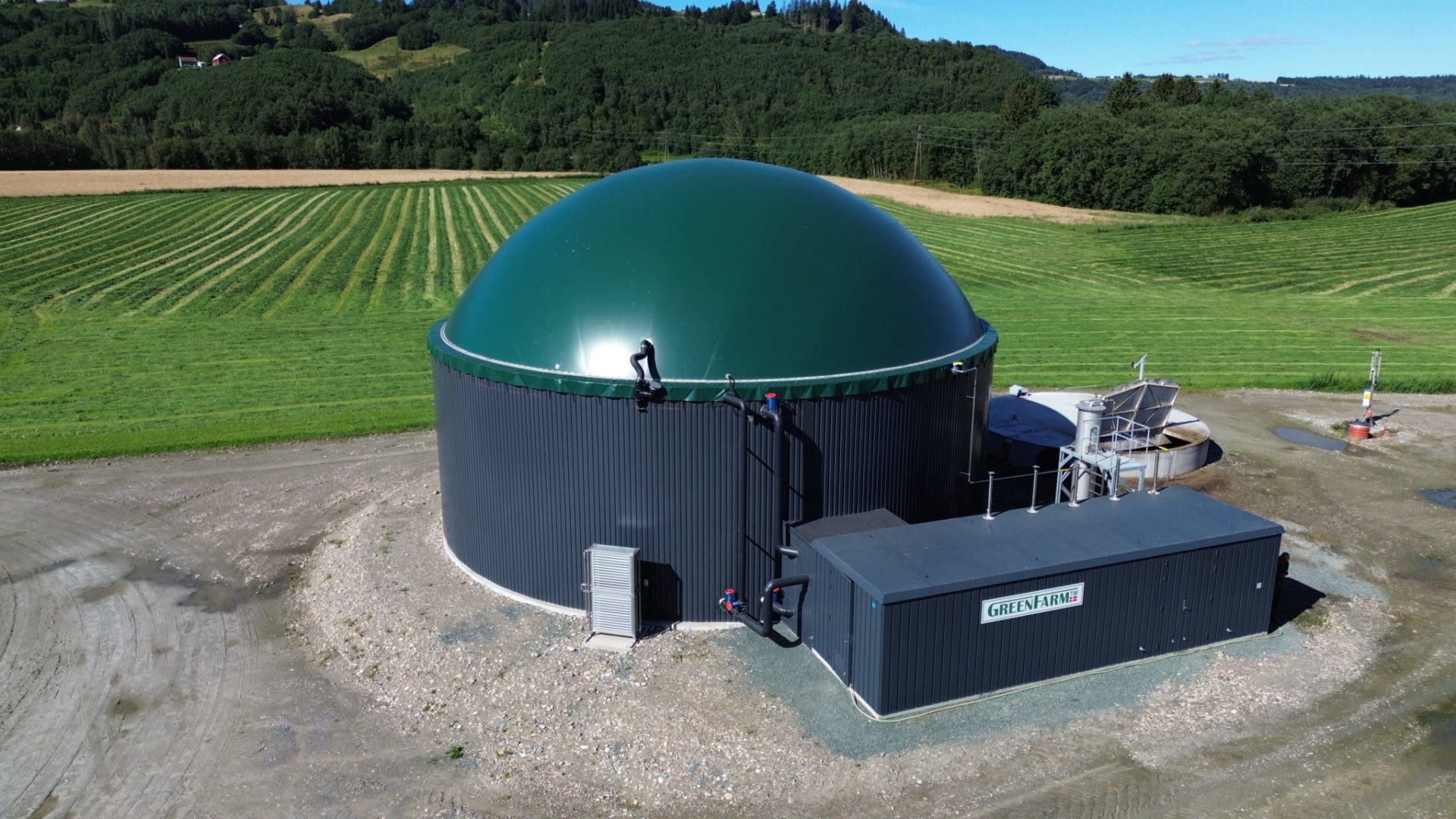
Converting livestock manure into local energy
Reducing agricultural greenhouse gas emissions requires action across the entire value chain. This includes practical, scalable solutions that create measurable impact at farm-level and reduce resource losses in everyday operations. To address this, the GreenFarm™ climate and energy system converts livestock manure into biogas for local energy production, reducing methane emissions at source. The solution demonstrates how farm-level technology can turn a climate challenge into renewable energy and stronger resource efficiency.
As global demand for high-quality food rises, agriculture faces increasing pressure to reduce its climate impact while maintaining productivity. Livestock farming plays an important role in global food systems, but it is also associated with greenhouse gas emissions, particularly methane from the storage and handling of liquid manure. This is significant because methane has a stronger warming effect than carbon dioxide in the short term.
The system can be implemented on livestock farms with slurry-based manure systems and is scalable for operations handling approximately 3,000 – 20,000 cubic metres of slurry annually
At the same time, many farms rely on purchased electricity and fossil fuels for daily operations. This exposes farmers to energy price volatility and contributes to overall emissions. Traditional manure management can also result in nutrient losses and leaching into surrounding water environments. Farmers are therefore navigating multiple challenges at once: reducing emissions, improving nutrient use, securing stable energy supply and complying with tightening climate and environmental regulation. The sector needs practical, farm-integrated solutions that can document their impact.
A resource-efficient on-farm solution
GreenFarm™, a Danish climate and energy technology company, has developed an on-farm climate and energy system designed to process livestock manure in a controlled system. Using primarily liquid slurry as feedstock, the modular plant captures methane during processing and converts it into electricity and heat for on-farm use. The system can be implemented on livestock farms with slurry-based manure systems and is scalable for operations handling approximately 3,000 – 20,000 cubic metres of slurry annually. The process also produces a treated fertiliser product intended to improve nutrient availability for crops.
In practice, this connects livestock production, energy generation and nutrient management within the same operational system. Manure is processed before being returned to existing storage for field application, while the energy produced is used directly in daily farm operations.
Integrating climate action into daily operations
By processing slurry in a closed system, methane emissions from storage can be reduced, and the captured energy can replace part of the farm’s external electricity consumption. In some cases, surplus electricity may be supplied to the grid, depending on local regulation. The treated fertiliser product can contribute to improved nutrient utilisation and may reduce the risk of nutrient leaching into surrounding water systems.
Taken together, the solution enables farms to integrate energy production, emission management and nutrient optimisation into daily operations. This demonstrates how farm-based climate technology can support emission reductions while maintaining productivity and operational stability.